ServicesRoof-Mounted Solar
Roof-Mounted Solar in Grapevine
We put solar on your roof the careful way: mounts lagged into rafters, every penetration flashed, wiring kept tidy. You get a timeline before work starts, an arrival window for each visit, and a heads-up from us when weather or a permit moves the plan.
Building a solar array on your roof
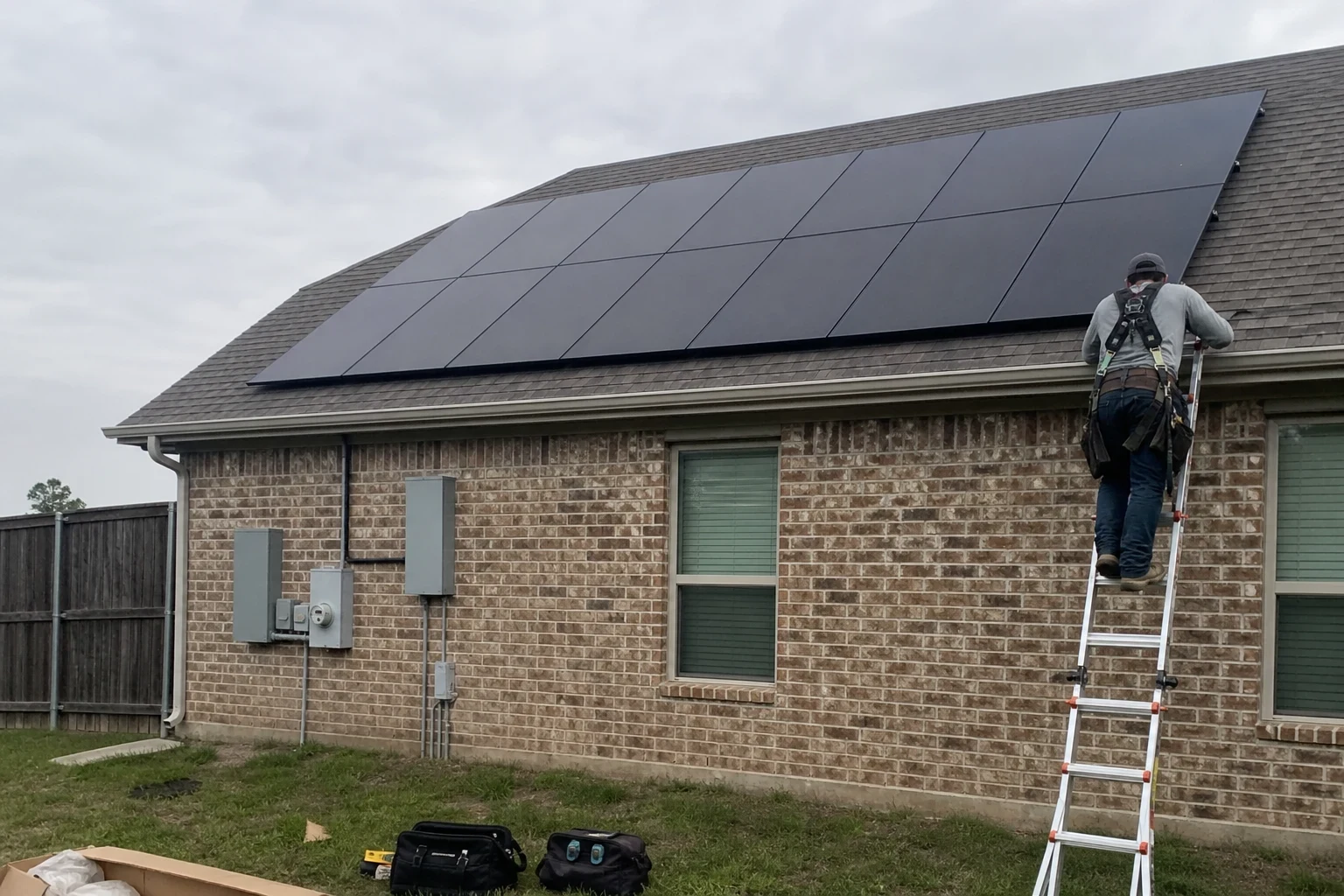
For most homeowners, the roof is the natural place for panels. The space is already there, the yard stays open and the array sits where it catches the most sun. What decides how well it holds up is hidden once we pack up: the way the racking is attached, the way each opening is sealed and the route the conduit takes to your electrical panel.
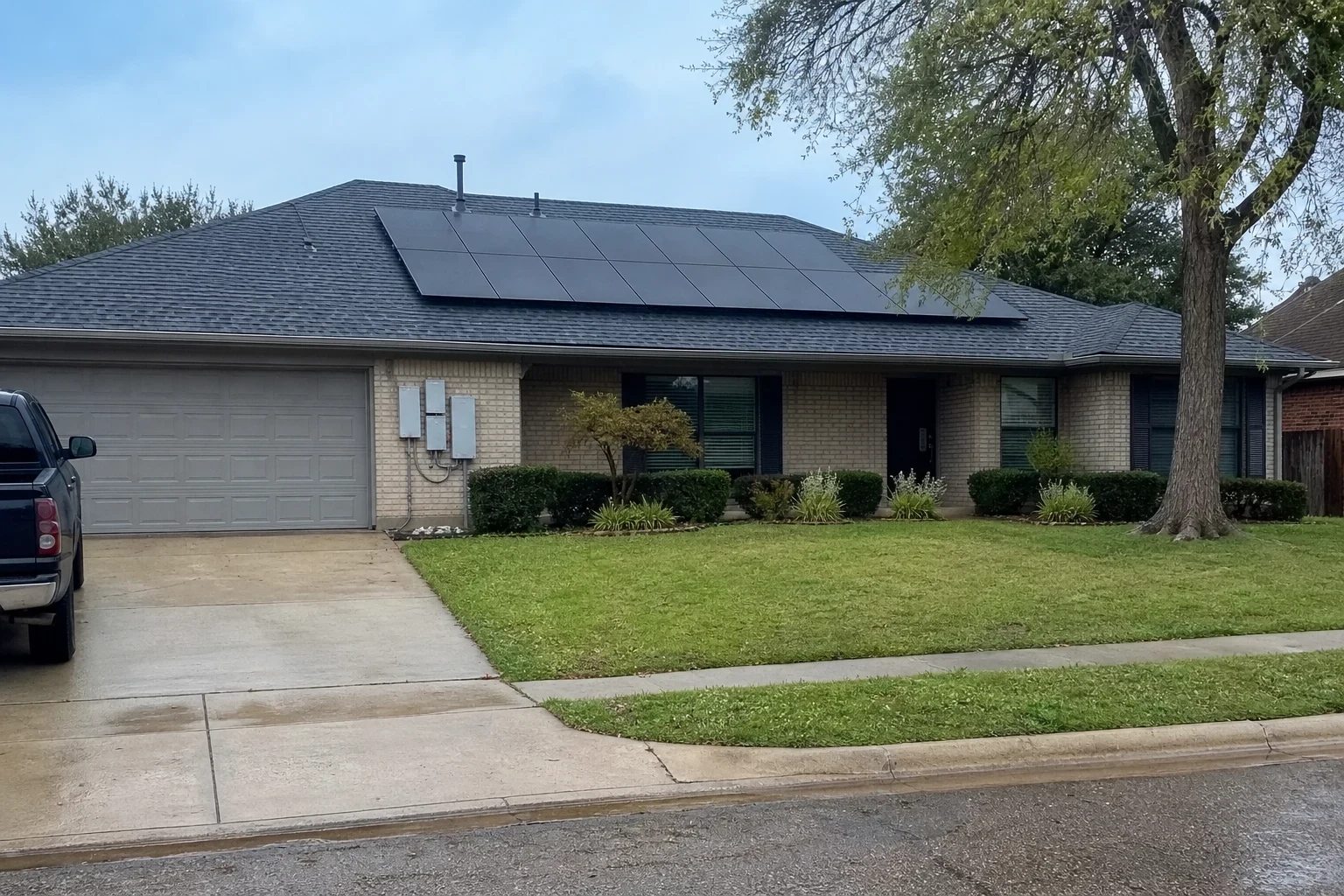
Your roof has to keep water out for decades, and we build with that in mind. Every mount goes into the framing rather than only the decking, and each one gets flashing that turns water aside just as your shingles do. Straight rails, wiring tucked under the panels and a tidy conduit run make the array look calm and intentional from the street.
For a brand-new system, see our solar panel installation page for how we design and size it. Here we focus on the roof and how we attach to it.
What the work includes
- Roof and attic check
- Before any design work, we walk the roof to note its condition, pitch and shade, then go into the attic to measure rafter spacing. When the shingles look worn out, you hear it from us straight away, so a reroof can happen before a single panel is mounted.
- Flashed, rafter-located mounts
- Each attachment is located on a rafter and sealed with a flashing that tucks under the shingle course above. It is slower than surface-sealing a bolt, and it is the detail that keeps water out through years of storms.
- Racking and layout
- Rails are set straight and level so the array reads as one clean shape. We keep setbacks the fire code requires and avoid vents and skylights.
- Wiring and conduit
- Panel wiring is clipped to the rails, off the roof surface. Conduit follows rooflines and corners where it can, so it sits quietly on the house.
- City permit and utility approval
- Our office files the building permit with the city and the interconnection request with your utility. On inspection day one of us is on site to answer the inspector's questions, and you get a short update each time a step clears.
Signs a roof array makes sense for your home
Summer bills that keep climbing
Long North Texas summers mean air conditioning runs for months. Panels produce most when that demand is highest.
A south- or west-facing roof plane
An open roof face with little tree shade is the best spot for panels. East-facing planes can work too, with somewhat lower output.
A roof with years of life left
Solar should go on a roof that will outlast a good stretch of the system's life. If yours is newer or in solid shape, the timing is right.
You want the yard left alone
A roof array uses no lawn or patio space and stays out of the way of kids, pets and landscaping.
An HOA that reviews placement
Texas law limits how far an HOA can block solar, though many still review where panels sit. We plan layouts that are easy to approve and help you prepare the drawings.
What changes the cost of a rooftop system
No two roofs are quite alike, so our price comes from what we find on the visit. The written estimate breaks the job into its parts, so nothing new appears on the bill later.
How big the system is
Each added panel brings more equipment and more attachments. We size the array from what your home really uses, not a rounded figure.
What the roof is made of
Composition shingle is the simplest to work on. Tile calls for special hooks and gentle handling, while standing-seam metal takes clamps that need no holes at all.
Slope, height and roof shape
A steep pitch, a second story or an array spread over several roof faces adds time and safety preparation.
Your breaker panel
Some older breaker panels must be upgraded before they can take solar. We look at yours during the visit so any upgrade is in the estimate from day one.
Permit and HOA paperwork
Permit fees and any added drawings your HOA asks for each appear on a separate line.
How a roof-mounted job runs
- 1
Phone call and site visit
We start with a conversation by phone about your bills and your roof, then set a visit with an arrival window you can plan around.
- 2
Design and permit
You get a layout showing where each panel sits and a written breakdown of the work. Permit review and utility approval usually take a few weeks, and we tell you up front which parts of the timeline are ours and which belong to the city or the utility.
- 3
Install days
Most homes need one to two days on the roof. We confirm the day ahead, give you an arrival window, protect landscaping below and clean up fasteners and packaging each evening. If wind or storms move the date, you hear it from us first, with a new date.
- 4
Inspection and turn-on
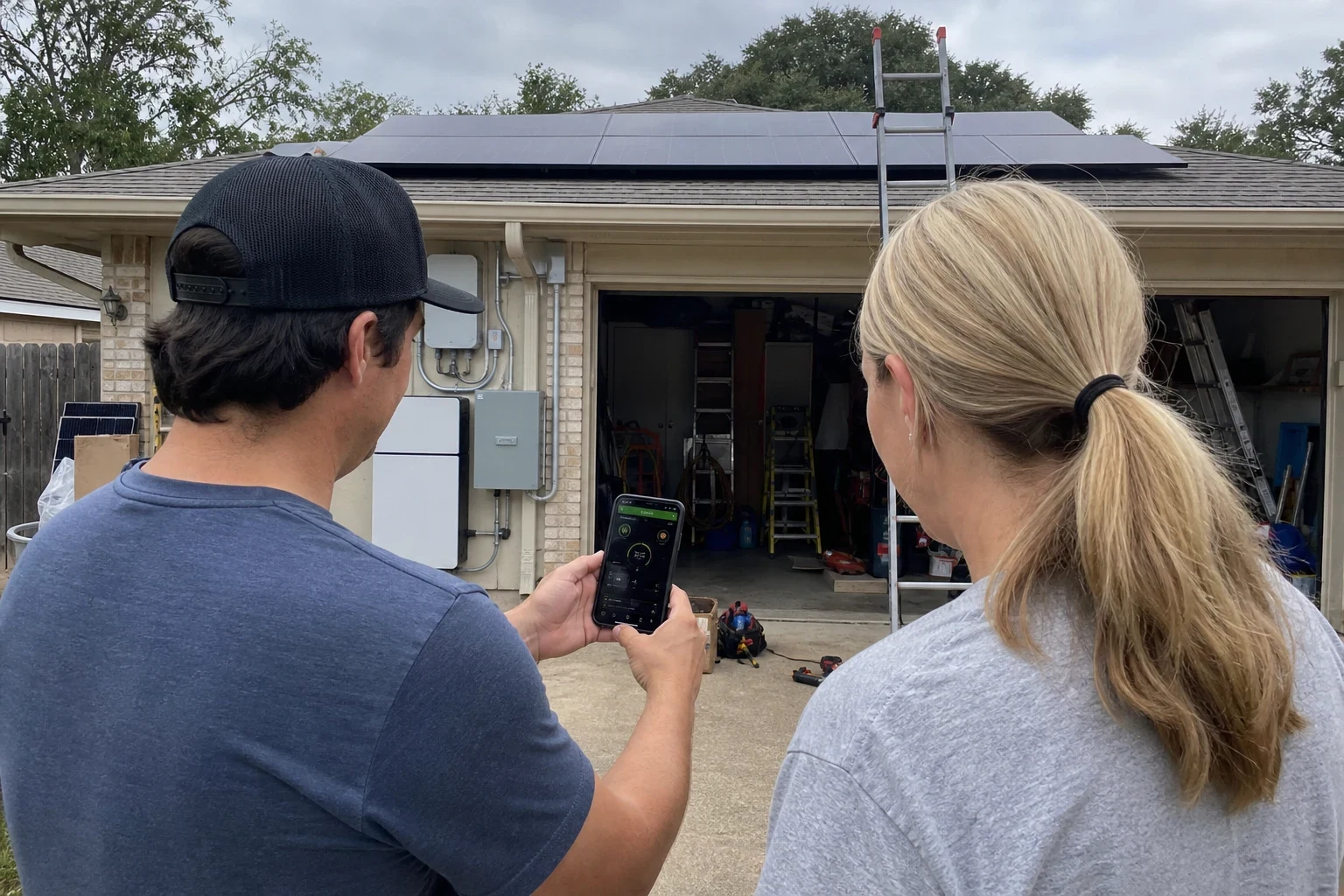
We meet the inspector, then wait on the utility's permission to operate. Once it comes through, we switch the system on and walk you through the monitoring.
Roof-mounted solar questions
Can solar mounts cause roof leaks?
A properly flashed mount sheds rain the same way the shingles around it do. We anchor each one into a rafter and slide a flashing under the course above, so water runs over the opening rather than into it. Before the panels cover the attachments, we take photos so you can see exactly how they were done.
Do I need a new roof before going solar?
Only if yours is close to worn out. We do not do roofing, but we will tell you honestly what we see so you can have a roofer handle it first and avoid removing panels later.
What happens to the panels in a hailstorm?
The front of a modern panel is toughened glass that is tested against hail strikes, and the array also keeps direct hits off the shingles it covers. A very large storm can still break a module. If that happens, our solar repair service can check the array and replace what was damaged.
How long from first call to a working system?
Install itself is usually one to two days. Design, permits and utility approval add several weeks, and we give you a realistic range at the start and update you if anything slips.
Can you put solar on tile or metal roofs?
Yes. Tile takes replacement hooks and extra care with breakage, and standing-seam metal is often the cleanest install of all because the clamps grip the seams.
How do I know you're a sound company to hire?
We are BBB Accredited and hold an A+ rating there. Day to day, you see it in how we work: every step in writing and updates from the first visit through turn-on.
Talk through your roof with us
Tell us about your roof and your bills, and we will set a visit with a clear arrival window. You will know the timeline before anything is scheduled.